

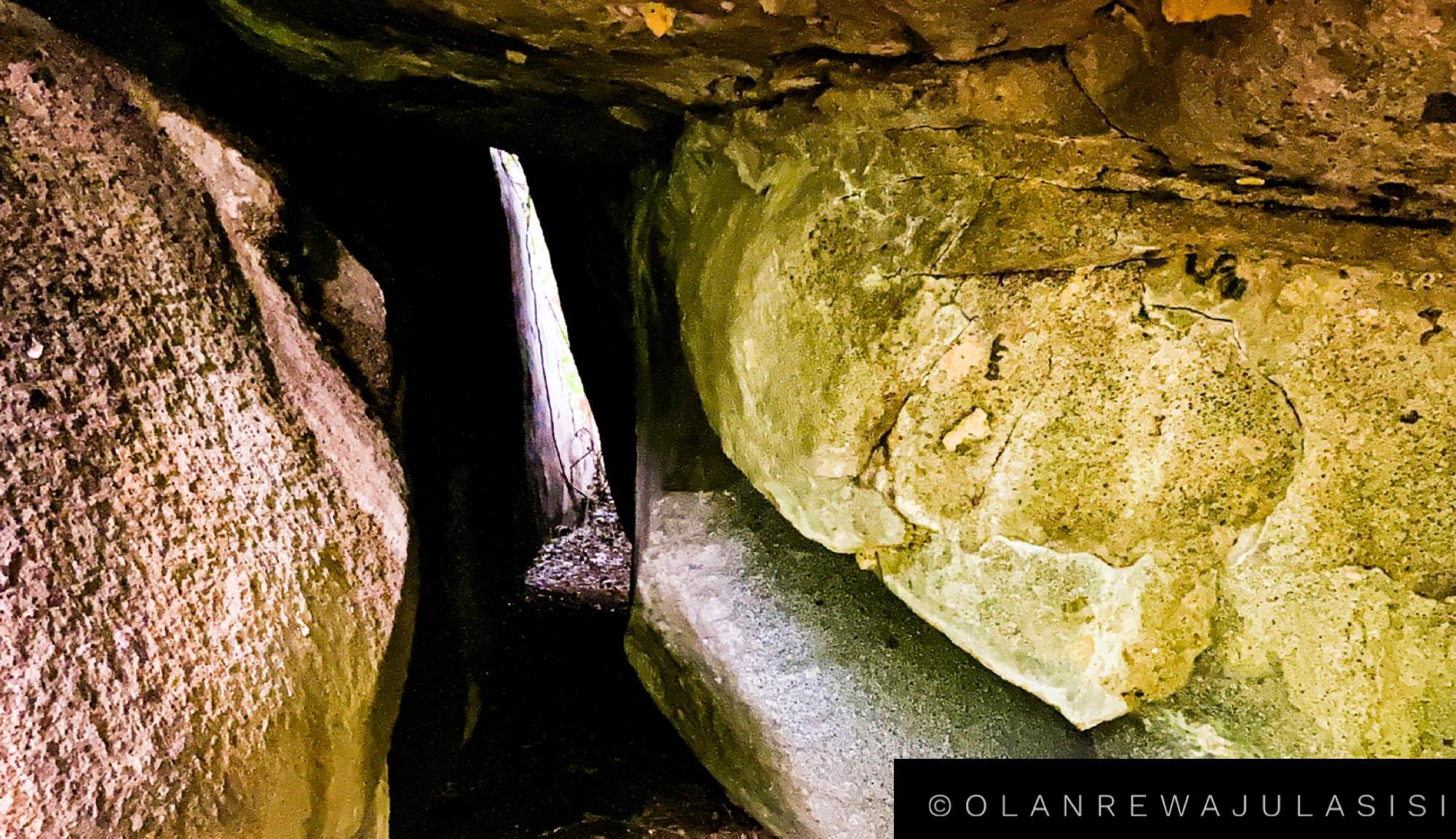
When you hear the name “Dangote,” what crosses your mind is the wealth accrued by a man and how he is well-known worldwide as Africa’s richest man. However, I am not talking about “Dangote,” the person, but “Dangote,” the company/groups owned by the person. The “person” has made Africa proud with his humility, personality, shrewdness, and business acumen. The company, on the other hand, despite providing many daily Nigerian/African needs, carries out activities that are disastrous and destructive to our history and material past. On the outskirt of my hometown, Ijebu-Igbo (Ajebandele nugba), lies many lines of rocks with multiple rock shelters. For the non-anthropologists reading this, rock shelters are more like the houses we live in today, but the only difference is that these are outcrops and caves of rocks where ancient people once lived. Within this vicinity lies over ten large rocks. This is one of the largest clusters of rocks I have seen in West Africa. I decided to pay Ijebu-Igbo and Ajebamidele Nugba a visit. I was appalled by the rate of ongoing destruction.
Starting from Ijebu Igbo, the road is covered with limestone ash. Before reaching Ajebandelenugba, be sure you will have to park your bike by the roadside more than twenty times because the Dangote trailers speedily ply the road back and forth every other minute. The dust created by this movement can cause ghastly accidents for passersby and travelers. I was told by the locales that a Dangote truck kills people every other week on that road, and sometimes on a busy week, it is more frequent. To be honest, that was the deadliest road I ever tread. Reaching the village, the Dangote group was mining on one of the large rocks. Obviously, you can’t gain access to the environment because it is well-secured by security personnel. I gained access to another rock with historical connections to the people. At this rock shelter, a stream flowed just about 50cm from its base. Around the edge of the rock shelter were many lithic materials of flakes and cores. To the non-anthropologists, lithic tools are stone tools used during the early, middle, and late Stone Age some thousands of years ago.
The Stone Age industry is one of the oldest material culture industries that helped the ancient population to thrive in the absence of pottery and metallurgy. Within minutes, I was able to quickly do a rescue archaeological survey of the entrance. I took photographs and named the site (Ajebandelenugba 2020-Surface). I picked more than 100 lithic materials from the surface of the rock shelter and edge. I walked around the rock shelter, and there was another long cave that would have served as the inner abode of the dwellers. The soil on the rock shelter is about 60cm and is indeed more than enough to have archaeological materials deposited within it over the last few thousand years.
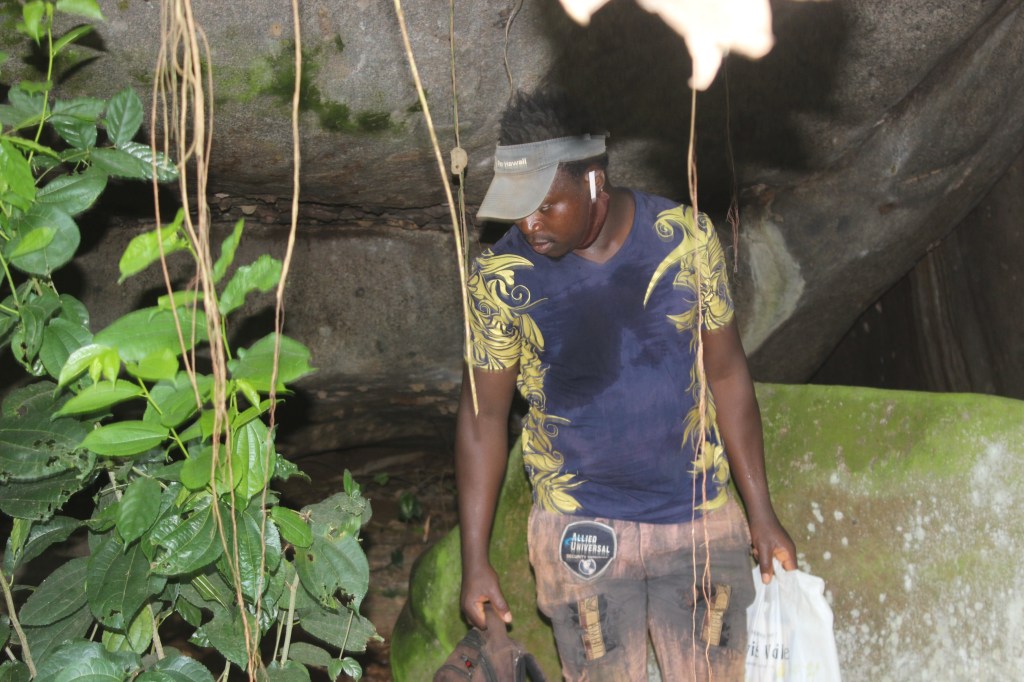
I voiced out my concerns about the massive destruction ongoing at the site and the need to quickly begin work there. That night, I sent a long email to the Dangote group on the need to stop their mining activities and allow archaeologists to conduct an environmental impact assessment before they continue their work.
I also recommended that they start employing archaeologists to survey their mining areas in the future to avoid damage to our material culture. Up till now, I am yet to get any response from the company. Is this not lackadaisical? I am not saying you should not mine; I am saying you should allow cultural experts to examine the mining areas before you start your mining activities. Luckily for us, they are currently still mining at one of the rocks leased to them. The ones with these lithic materials have not been leased to them, so there is enough time to carry out the archaeological investigations. Going forward, I will plan to work with an interdisciplinary team of scholars to do a systematic archaeological investigation on this very remarkable site which might hold the key to the understanding of human evolution and occupation in the Gulf of Guinea.
The scars on the flakes and the platforms on the cores are evidence of their cultural materiality. The tiny blades and side scrapers are as sharp and clean as those seen from Stone Age sites from the rest of the world. These are not just natural rocks; they are archaeological sites under imminent destruction by Dangote groups. I am shouting this from the rooftop of my voice, and I want every eye reading this to share until it reaches the desk of those in charge of the mining activities at Dangote. They need to act. It will also be a great honor for the company to have many recent archaeology graduates working with them. That way, Dangote will be proud to employ archaeologists and aid in discovering material culture that is, for the most part, still hidden in mystery. Dangote has many mining centers as this all over Nigeria and beyond. We might have been destroying sites without knowing. Something must be done before we wake one day and realize we have converted Stone tools to sugar, spaghetti, and other goods produced by Dangote. I hope that the Dangote group will rise to this occasion and stand to their ideals as a forerunner in everything that has to do with advancing everything “local.” If you are talking local, THIS IS VERY LOCAL!!! #DangoteStopTheDestruction#StopTheDestruction
 OLANREWAJU LASISI