
Quantum archaeology stretches the bounds of traditional archaeology. It has often been sensationalized as a means to resurrect the dead through intricate reconstructions of DNA and other biological materials. However, this narrow view overlooks the profound and more nuanced aspects of quantum archaeology, which delve into the relationship between the past, present, and potential future.
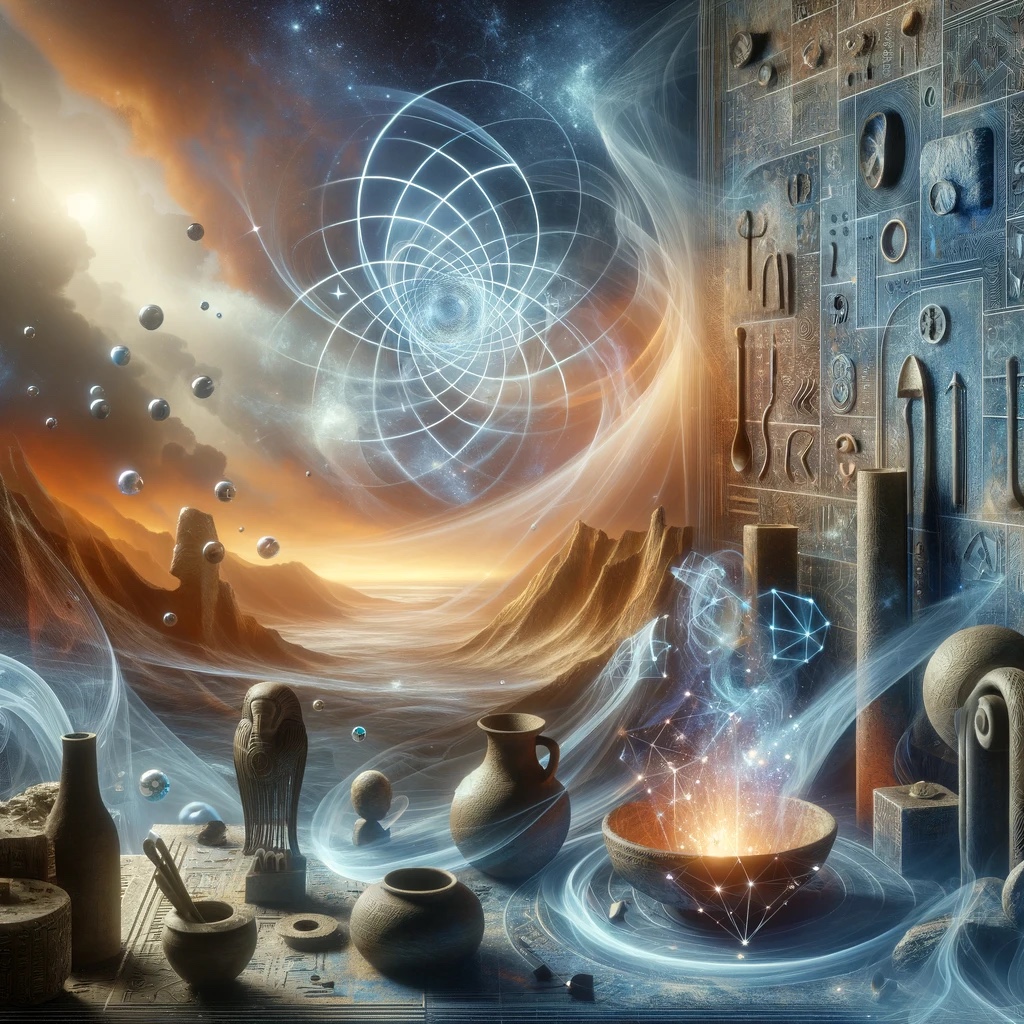
At its core, quantum archaeology is about recognizing the nonlinear nature of time and the unique experience of such time by an observer. In the quantum field, the observer plays a pivotal role – their interaction with the quantum system affects the system itself. This idea, when applied to archaeology, suggests that our understanding of the past is not just a linear, fixed narrative but is intertwined with our present observations and future possibilities.
This concept is rooted in quantum mechanics principles like entanglement and superposition. Entanglement suggests that particles can be interconnected in such a way that the state of one instantly influences the state of another, no matter the distance apart. Superposition, on the other hand, posits that particles can exist in multiple states simultaneously. When applied to archaeology, these principles suggest that the past is not a static, unchangeable series of events but is, in a sense, still ‘alive’ and subject to the influence of present observations.
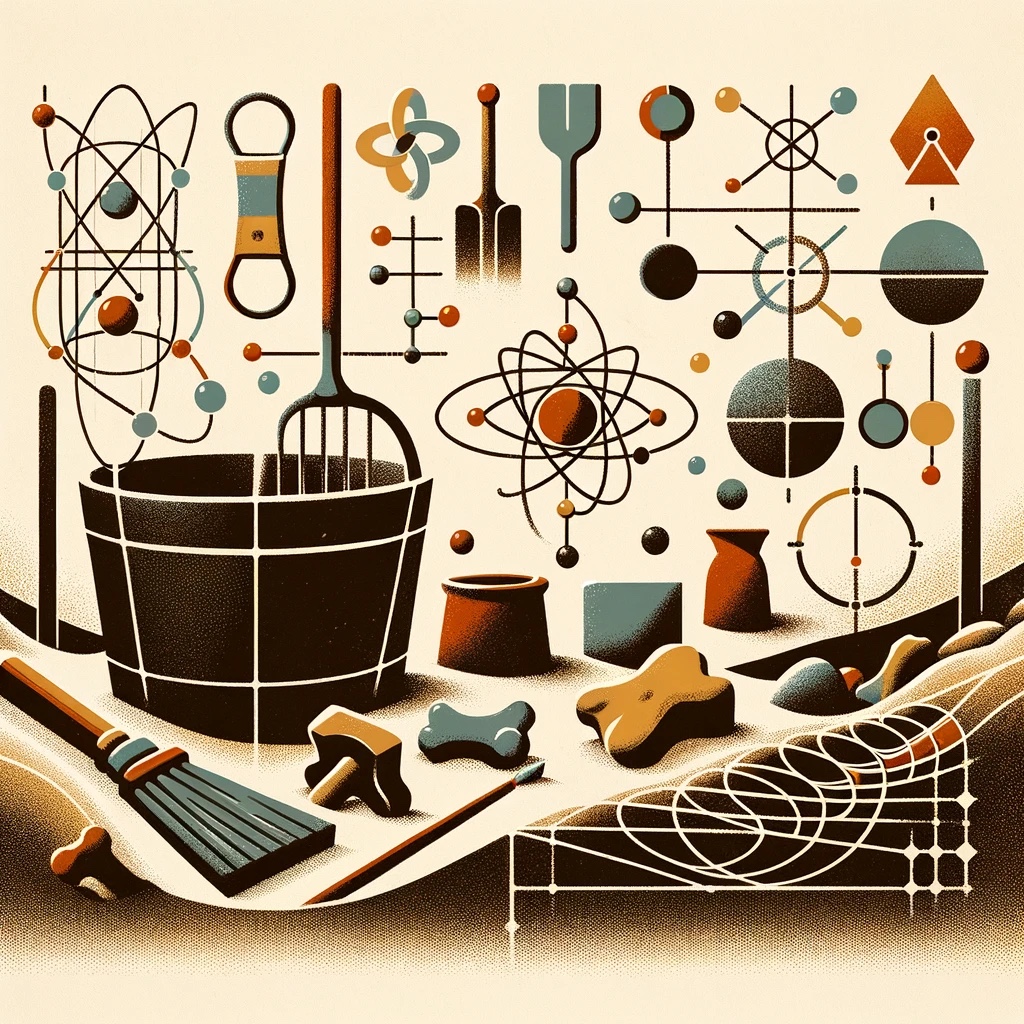
Quantum archaeology, therefore, expands the study of the past beyond traditional methods. It’s not just about uncovering and studying ancient artifacts and sites but understanding how our present-day interactions with these elements can affect our perception and interpretation of history. This approach acknowledges that history and archaeology are not merely about unearthing what has been but are actively involved in the making of the ‘now’ through a continuous interaction of the past, present, and potential future.
Going beyond the concept of raising the dead, quantum archaeology offers a more profound exploration of history. It posits that by understanding the quantum aspects of time and observation, we can gain deeper insights into historical events and eras. This could revolutionize how we study and understand ancient civilizations, allowing us to perceive the past in a more dynamic and interconnected way.
Furthermore, quantum archaeology could lead to new methods of historical analysis and preservation. For instance, by applying quantum computing to archaeological data, we might be able to simulate historical environments or events in unprecedented detail, offering new perspectives on how ancient societies lived, interacted, and evolved.
In summary, quantum archaeology is much more than the science-fiction notion of resurrecting the past. It’s a transformative approach that challenges our linear perceptions of time and history. By acknowledging the quantum mechanics principles at play in our observation and understanding of the past, quantum archaeology not only deepens our understanding of history but also reshapes our relationship with it, opening up new possibilities for exploring the intricate web of past, present, and future.
 OLANREWAJU LASISI
Hi dear Sir/Madam
A big scientific community must be formed to work together to achieve resurrection. All people interested in resurrection have to do their part in helping to speed up the process.
GOD BLESS ALL
LikeLiked by 1 person
Agreed; exactly like what we have in age reversal field. Different teams working through different paths towards the same goal. I hope scientists also don’t neglect time travel, if they can invent THAT then that would be amazing, the best way to resurrect the dead is prevent them from dying in the first place. We can exchange the body of the dying person (who is still alive) with a lifeless clone without anyone seeing us in the past, so no parallel timelines will be created let alone paradoxes. The past will remain the same while we saved the person.
LikeLike