
These are some of the courses I have taught and was a teaching assistant
Introduction to Field Archaeology

This course introduces students to the practical aspect of archaeology. Students will be exposed to the methods of practicing archaeology at the Robert Carter House, Colonial Williamsburg. They will be taught how to wash, sort, and catalog archaeological materials after excavation. More on this excavation here.
Indians of North America with Dr Kathleen Bragdon
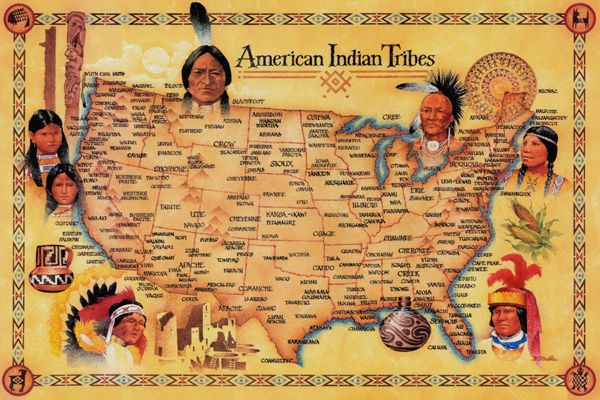
This course is an overview and introduction to Native American Studies, from an anthropological point of view. Native American Studies has come to include the archaeology, history, arts, languages, literature, economics, politics, and many other aspects of Native American life and culture, past and present. Native Americans themselves as well as non-Natives contribute to this research, all of which is marked by controversy and debate. We will approach this growing field by touching on a number of topics of particular interest to contemporary scholars, and students will be asked to explore the issues and report on them to the class.
The Idea of Race with Dr Michael Blakey
This course engages students in the idea of race emerged as a biological concept during the European Enlightenment. The earlier cultural and religious distinctions drawn among human groups were increasingly substituted or elaborated by ‘race’. Western notions of science came to legitimate a natural hierarchy within the context of colonial, slave holding and later industrial capitalist societies whose elites benefited from the idea that the inhumanity of their privilege was natural. An ideology of white supremacy emerged simultaneously from science and society, relative to which racial identities were constructed and historically transformed. Racial ideas have infused many American institutions and their pervasiveness accounts for their paradigmatic power. The history of biological anthropology is packed with reflections of broadly believed racial ideas. These ideas’ transformations can be seen in evolving theories meant to explain the relationship between human behavior and biology. This course examines those ideas in biological anthropology and related fields. Students discover aspects of race and racism in past and present society that often go unrecognized. They equally develop an appreciation of ways in which culture can systematically influence scientific thought, raising a more general critique of the scientific way of knowing than is limited to the example of race. Problems and prospects for theories of the interactions between human biology and behavior are considered.
Introduction to Cultural Anthropology with Dr William Fisher

This course will introduce students to the basic concepts anthropologists use to describe human interactions. We will acquire a vocabulary of terms, a sense of the history of the discipline and a chance to debate specific points of view proposed by the discipline. The relevance of anthropological systems approach to current events is a central challenge of the course. The instructor is committed to helping students formulate and express their own views and to consider what kinds of possibilities for involvement and responsibilities might be associated with their viewpoint.
Contemporary Problems in Anthropological Perspectives with Dr Jonathan Glasser

This course will introduce students to the basic concepts anthropologists use to describe human interactions. This course aims to demonstrate what it means to apply anthropological perspectives to some pressing contemporary problems, both globally and in the U.S. context. Instructors’ hope is that students emerge from this course with a richer understanding of these problems, a solid overview of anthropology as an academic discipline, and the ability to apply anthropological perspectives to the problems that you encounter beyond this course in a thoughtful way.
 OLANREWAJU LASISI