

2021-A Preliminary Report on the Excavation at Ijebu-Ode Royal Palace Complex

This research was carried out in the ancient palace of Ijebu-Ode, the capital of the Ijebu kingdom. Over 20 units (ranging in size from 1m x 1m to 20m x 15m) were excavated from the King’s quarters, Queen’s quarters, Palace gardens, and courtyards. This series of excavations yielded a diverse range of artifacts including, beads, bronze bell anklets, knife blades, etc. A notable find is the first evidence of ceramic pavements in the Ijebu kingdom. Team members unearthed two pavements at the palace complex; one is a carved pavement that is an effigy of a local deity, the other is a geometric pavement with astronomical alignments. This research showed that behind the organization of the palace complex lies a well-designed and integrated architecture, ritual/religion, astronomy, politics, governance, and commerce, all of which functioned as a system that sustained the Ijebu Kingdom.
2021-Akinwumi Ogundiran: The Yorùbá: A New History
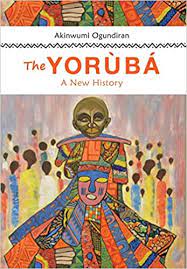
This is a review of The Yoruba by Akinwumi Ogundiran. *************************************************************** Lasisi, O. Akinwumi Ogundiran: The Yorùbá: A New History. Afr Archaeol Rev (2021). https://doi.org/10.1007/s10437-021-09436-8.
2021-Promoting the Nigerian Museum: A Case For Ijebu National Museum and Others
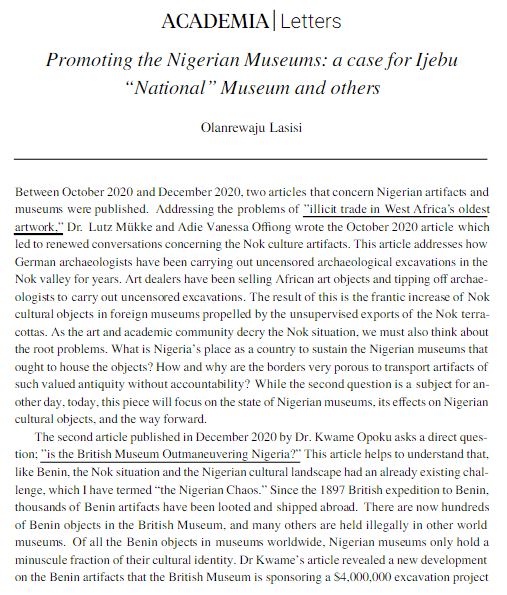
This paper raises other issues amidst the concerns of scholars concerning the repatriation of native artifacts. In what I term “Nigerian Chaos,” this paper informs scholars on the dysfunctional state of public institutions in Nigeria and it’s effects on the repatriated artifacts. Thus, if artifacts must be returned to the Nigerian museums, these receiving museums must be devoid of the Nigerian Chaos.
2019-Crisis and Transformation in the Bight of Benin at the Dawn of the Atlantic Trade- 2019
Why were captives for sale in the Gulf of Benin in the late 1470s? In this paper, we explore changes in the Ijebu and Benin polities before the opening of the Atlantic trade and their consequences in shaping the new trade in slaves in the late 15th and early 16th century. My departure point is the recent dating of the 165-km-long enclosure known as Sungbo’s Eredo in southwestern Nigeria. Based on emerging archaeological data, difficult-to-assess Ijebu oral traditions of the deep past, and scarce early European sources, we propose a scenario of change in the political economy of African polities in the Gulf of Benin during the mid-14th century. A demographic crisis, we suggest, triggered competition among regional polities for the control of people. The necessity to defend the local population and raids into neighboring areas led to radical change in the polities’ organization and to a transformation of the landscape. Kingship was adopted in Ijebu, while a new dynasty took over power in Benin. Both new ruling dynasties were possibly foreign warrior aristocracies that based their spiritual powers in imported cults. The new political economy became dominated by the accumulation and consumption of dependents through raids and wars of expansion. By the time the Portuguese arrived in the Gulf of Benin in 1472, they found ready surpluses of captives that could be exchanged for exotic prestige goods brought by the Europeans, especially copper and brass. This situation contrasted markedly with the demand for captives the Portuguese had met on the Gold Coast. They were able to take advantage of their understanding of these contrasting markets to purchase captives in the Gulf of Benin for resale on the Gold Coast.
Nigerian archaeology has been through a series of developmental stages. The current trend in the studies of urbanization takes a cue from postcolonial pedagogy which seeks to interpret indigenous material cultures from the eye view of their makers. This echoes a localized model of urbanization. Methods and paradigms for urbanism expand, and indigenous archaeologists have their voices heard without the outside veil. Despite these advances in methods and approaches, little is being explored in the direction of earthworks and earthwork studies to corroborate researches on urbanization and state consolidation. This article turns the light on this avenue and suggests that more earthen works should be investigated if unanswered questions in urban studies must be answered. PLEASE NOTE THAT THIS PAPER WAS PUBLISHED IN JULY 2019 BUT BACKDATED BY THE JOURNAL TO 2017, VOLUME 47 BECAUSE THERE WAS AN HIATUS IN THE PRODUCTION TIMELINE.
2016-New Lights on the Archaeology of Sungbo’s Eredo
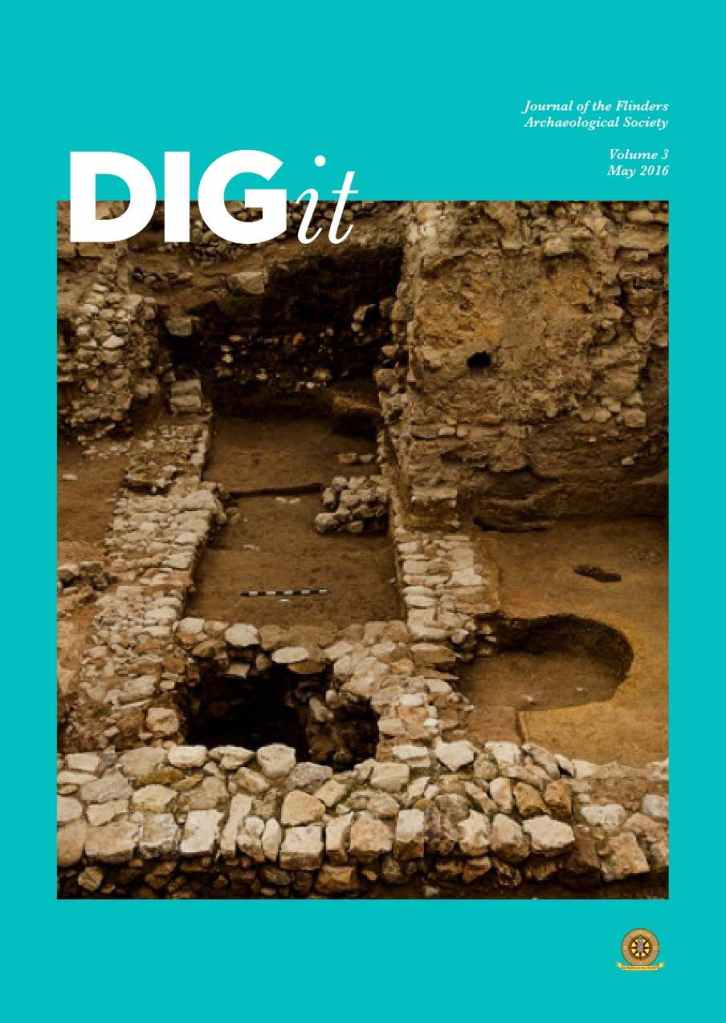
Earlier studies carried out on Sungbo’s Eredo (embankment) showed that it is about 165 km in circumference and surrounds the whole of Ijebu Kingdom. From the date obtained by Aremu et al. (2013: 17), the structure is thought to have been built around 5000 years ago. However, it is possible that the site was also occupied during the medieval period, as evidenced in the remains around the sacred grove. This paper reports on a GPS survey of the site and excavations carried out during 2014 fieldwork archaeology intended to confirm or refute the dates previously obtained from the embankment. It examines the cultural materials recovered from the excavation, including Late Stone Age materials and those of the Neolithic period. Analysis of the Neolithic and Late Stone Age materials suggests that the site may be of greater antiquity than earlier reported and that this forest zone of West Africa was occupied at different time periods.
 OLANREWAJU LASISI